Flying termites, often referred to as alates, swarmers, or winged termites, can cause considerable anxiety among homeowners in Sydney. However, it is crucial to recognise that the appearance of flying termites does NOT necessarily mean your home is under immediate threat. Instead, this serves as an important indicator to check that your termite protection measures and annual inspections are up to date, ensuring your property is safeguarded against potential infestations that could compromise its integrity.
Understanding the situation in detail is essential. This comprehensive guide will delve into the reasons behind the appearance of flying termites, outline the appropriate responses when you encounter them, and highlight the behaviours you should avoid to maintain your home’s structural integrity and value.
Gain Insights into the Lifecycle and Behaviour of Flying Termites
Flying termites, commonly known as swarmers, signify the reproductive phase of the termite lifecycle, with their primary purpose being to depart from their colony. Their goal is to take flight, mate, and subsequently establish new colonies in different locations. This fascinating phenomenon typically occurs under specific environmental conditions:
- During warm and humid weather, which creates ideal swarming conditions
- Following rainfall after a heatwave, which triggers their reproductive cycle
- As the seasons transition from late spring into summer, marking their peak activity
For the majority of the year, termites remain hidden, quietly consuming timber and expanding their colonies. By the time you notice swarmers, these termites may have been active in your vicinity for several months, potentially even within the structural confines of your home.
Swarmers are particularly attracted to light sources, which is why homeowners often find them gathering around:
- Light fixtures that illuminate their surroundings
- Windows that provide a pathway to the outside
- Porch lighting that attracts them during evening hours
- Television screens that emit bright light
- Bathroom exhaust fans that can create conducive environments
In areas such as The Hills District, where natural bushland and termite mounds are abundant, witnessing large swarms of termites on warm, humid evenings is quite common. If you travel along Windsor Road towards Rouse Hill, you will observe numerous termite mounds lining the median, indicating the presence of concealed colonies deeper within the bush, which underscores the need for vigilance.
Take Immediate Action If You Spot Flying Termites: A Step-by-Step Guide
First and foremost: Stay calm.
Your home is not being actively consumed by these insects; understanding this can help alleviate unnecessary panic.
Flying termites neither bite nor sting, nor do they inflict structural damage. They are simply searching for light and moisture during their mating process, which is essential for the potential formation of a new colony.
Here’s your detailed action plan to ensure your home remains safe:
1. Confirm Your Termite Inspections Are Current and Thorough
If you have not arranged a termite inspection in the last twelve months, it is imperative to schedule one immediately. Annual inspections are mandated by Australian Standards, ensuring that your home remains protected against infestations and that any potential issues are identified early.
2. Closely Observe Weather Conditions for Swarming Activity
Warm, humid evenings following rainfall create optimal conditions for termite swarming. It is not unusual to encounter swarmers during these specific weather scenarios, making awareness of changing conditions crucial.
3. Accurately Distinguish Between Insect Types to Identify Termites
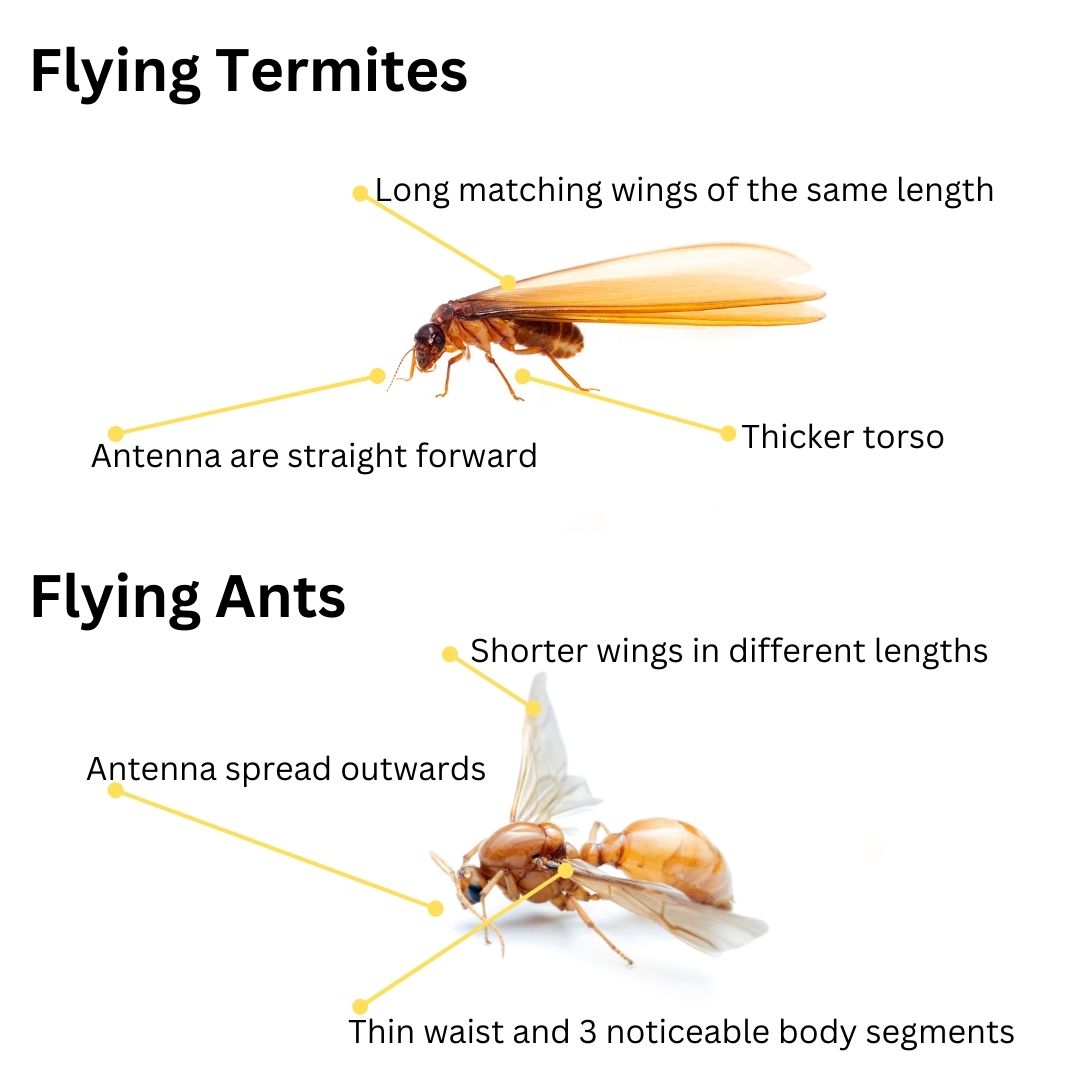
While flying ants and flying termites may appear similar at first glance, there are significant differences to be aware of:
- Termites possess straight antennae, whereas ants feature bent antennae, which is a key distinguishing factor
- Termites have equal-sized wings, while ants possess two large and two small wings, which is another important difference
- Termites have a thick, straight body, while ants exhibit a thin ‘pinched’ waist, further differentiating the two insects
Recognising these distinguishing traits will assist in confirming the type of insect you are dealing with and guiding your next steps.
What Actions Should You Avoid When Dealing with Flying Termites?
There are common responses that could exacerbate the situation. Here’s what you should refrain from doing to ensure effective management:
Do Not Spray Them with Insecticides
While spraying may eliminate a few swarmers, it does not address the root issue—the underlying colony—and could obstruct professional treatment methods, potentially complicating future interventions.
Avoid Sealing Their Exit Holes Prematurely
Sealing exit holes might compel termites to create new pathways, resulting in further structural damage that should be prevented at all costs. It’s essential to allow experts to assess the situation first.
Refrain from Disturbing Mud Trails Inadvertently
Termite experts require intact mud tubes to accurately assess termite activity and formulate the most effective treatment strategies. Disturbing these trails can hinder their ability to provide a comprehensive evaluation.
Is My Home Susceptible to Termite Infestation?
Observing flying termites does not automatically imply that your home is infested. However, it serves as a crucial reminder to take preventive actions. Scheduling an annual termite inspection with a qualified professional is your optimal defense, allowing you to identify potential issues before they escalate into costly repairs. While prevention may seem like a considerable expense initially, the financial impact of extensive termite treatments and repairs can be significantly greater if infestations go unchecked.
What Preventive Strategies Can I Implement to Safeguard My Home from Termites?
Conducting your annual termite inspections is the most crucial first step in protecting your property. Additionally, follow your technician’s recommendations for ongoing prevention strategies, which may include:
- Timely refilling of your reticulation system, ensuring it functions effectively
- If you have a baiting system, ensure it is regularly monitored by your technician to maintain its efficacy
- If you do not currently have a termite barrier, consider investing in one to provide an additional layer of protection for your property.
When Should You Initiate Treatment for Effective Termite Protection?
There is no wrong time to begin preventive measures; however, do not wait until swarmers become visible to take action. By the time flying termites are noticeable, there may already be hidden damage present, making it vital to start implementing preventive strategies now to guarantee your property remains safeguarded throughout the year.
At So Pest Off, we are dedicated to assisting you in making informed, proactive decisions regarding termite protection, without resorting to fear tactics that may cause unnecessary alarm.
Contact us for dependable inspections and effective, transparent solutions tailored to your needs.
Your Complete Guide to Frequently Asked Questions About Flying Termites
Are Flying Termites a Risk to My Property’s Structural Integrity?
No, flying termites do not bite, sting, or cause damage to timber. Their primary role is solely to reproduce and establish new colonies, posing no direct threat to your home.
Does the Presence of Flying Termites Signal a Home Infestation Risk?
Not necessarily. Swarmers frequently originate from nearby bushland or adjacent properties. However, it serves as an important reminder to schedule your annual inspection to assess your home’s condition.
During Which Season Do Flying Termites Typically Emerge in Sydney?
They usually appear from late spring through summer, particularly after a hot day followed by afternoon or evening rain, creating ideal conditions for their activity.
What Attracts Flying Termites to My Home Environment?
They are strongly attracted to light sources, including indoor lighting, porch lights, lamps, and even television screens, making it essential to manage light exposure during peak swarming times.
Should I Use Sprays on Flying Termites If I Encounter Them?
No, using sprays may eliminate a few swarmers but does not impact the main colony. It can also interfere with future professional treatment efforts, which is why it’s best to avoid this method.
How Long Do Termite Swarms Typically Last in the Environment?
Generally, swarms endure between 20 to 40 minutes. Swarmers quickly lose their wings and die shortly thereafter if they are unable to successfully establish a new colony, highlighting the transient nature of their activity.
Can Flying Termites Access My Walls and Interior Spaces?
They can only enter if there is an active termite colony or an existing structural entry point. Swarmers do not chew their way into buildings, so access is contingent on existing vulnerabilities.
What Should I Do After Noticing Flying Termites in My Home?
Immediately schedule or update your annual termite inspection, assess your barrier or reticulation system, and adhere to the recommendations provided by a licensed technician to ensure your property remains safeguarded.
See Flying Termites: What They Really Mean (And What You Should Do)
The Article: See Flying Termites: What They Really Mean (And What You Should Do) first appeared on https://writebuff.com
The Article Flying Termites: Understanding Their Significance and Response Was Found On https://limitsofstrategy.com
The Article Flying Termites: Their Importance and How to Respond First Appeared ON
: https://ad4sc.com
Comments are closed